
How Golden Goose Non-authentic pairs Have Gotten More refined — And More Risky
The Counterfeit Low-top shoe Industry Has Reached a New Level
A decade ago, spotting a non-authentic Golden Goose sneaker was almost embarrassingly simple. The seams came apart after a few wears, the star logo sat crooked on the side panel, and the “aged” leather looked like it had been attacked with sandpaper. Today, in 2026, the situation is dramatically different — and far more troubling. The counterfeit online marketplace for upscale sneakers has evolved into a sophisticated, tech-driven operation worth an estimated $4.5 billion annually. Golden Goose, with its instantly recognizable worn-in aesthetic and $400–$700 retail sale price tags, has become one of the most heavily counterfeited casual shoe brands in the world. What makes this particularly insidious is that the brand’s defining feature — pre-distressed upper material — gives counterfeiters a structural advantage: imperfections are baked into the design, making fake golden goose pairs harder to dismiss at first glance than non-authentic pairs of any cleaner trainer.
From Obvious Knockoffs to Near-Perfect Dupes
Early-Generation Counterfeits: The Warning Signs Were Everywhere
In the early 2010s, golden goose knockoffs were identifiable with minimal effort by anyone who had handled a genuine set. The leather on counterfeit units was thin and plasticky, entirely lacking the supple, butter-soft feel of the real Nappa or full-grain leather used in Italian Golden Goose production. The signature star patch — made from cut suede or contrasting upper material on genuine sneaker pairs — was frequently printed directly onto the upper on non-authentic pairs rather than stitched and applied as a separate dimensional element. Laces were uniformly white and flat, while genuine sneaker pairs came with slightly off-white, pre-worn-looking laces with varied texture and subtle fraying. The golden side star logo embossed on the tongue was often the wrong shade — too bright, too flat, or without the correct depth of impression. Soles were another reliable figure out: early golden goose replicas used low-cost, bright-white rubber that failed to replicate the off-white, slightly amber-toned outsoles of legitimate shoe pairs. For anyone who had spent five minutes with a legitimate set, the difference was impossible to miss.
The Shift: More accurate Equipment, Stolen Specifications
Around 2019–2021, something structural changed in the counterfeit supply chain. Factories in Guangdong and Fujian provinces began investing in higher-grade fake golden goose men machinery and sourcing components that more closely approximated those used by legitimate Italian premium manufacturers. Some investigative reports suggest that counterfeit producers began acquiring authentic Golden Goose casual footwear in bulk — not to resell, but to reverse-engineer them down to millimeter-level measurements and material compositions. There are credible accounts from brand protection firms of disgruntled supply chain employees leaking technical specifications, adhesive formulas, and material sourcing contacts that helped counterfeit factories close the build quality gap rapidly. By 2022, golden goose lookalikes coming out of top-tier counterfeit operations — marketed as “1:1” or “Mirror Quality” on gray-market platforms — were noticeably harder to distinguish from originals on casual inspection. The build quality curve has accelerated through 2025 and into 2026, and the industry consensus among authenticity review professionals is that the gap is the narrowest it has ever been.
What Makes Modern Fake Golden Goose Sneakers So Convincing
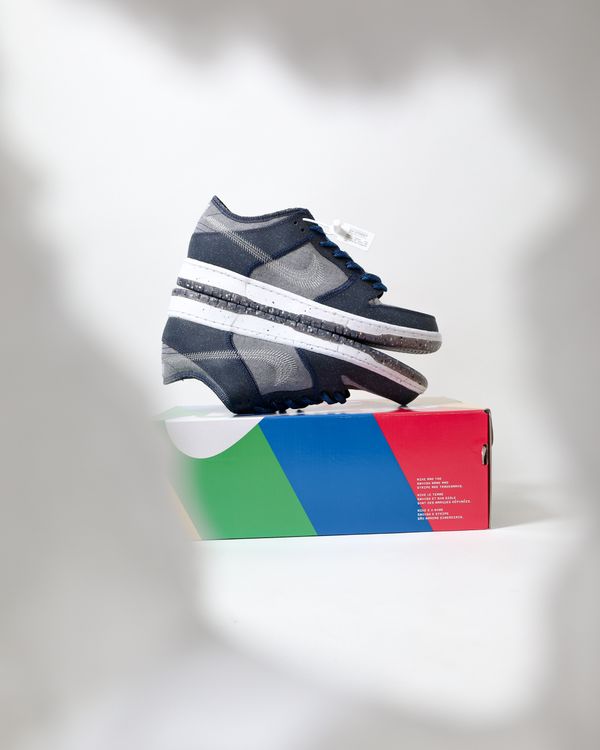
Construction inputs: Closing the Finish Gap Faster Than Expected
The most alarming improvement in golden goose imitations over the past three years has been in raw components sourcing. High-tier counterfeit producers now use genuine split-grain or corrected-grain material that, to the touch, approximates the feel of the real product for buyers without hands-on experience with genuine pairs. The distressed textures — surface scrapes, color fading, deliberate scuff marks — are applied with industrial tumbling machines and chemical aging treatments rather than by hand, but results are increasingly convincing even under close examination. Suede stars on modern fake golden goose pairs are cut from actual suede or high-grade microfiber suede, not painted or printed as they were in early-generation knockoffs. Even the metallic side star detail present on certain models is now applied with precision tooling and correct metallic finishes rather than foil heat transfers. Thread counts on seams have risen considerably, and the contrasting colored thread used on various Golden Goose colorways is now matched with a precision that was unthinkable in 2016.
The Distressing Deception: The Brand’s Strength Is Now Its Vulnerability
Here lies the cruel irony at the heart of the golden goose fake problem: the brand’s core identity — trainers that aesthetic pre-worn, imperfect, and lived-in — is precisely what makes dupe golden goose so difficult to authenticate by surface-level inspection alone. On virtually any other high-end low-top shoe, an uneven stitch or surface scuff is an immediate authentication alert flag. On Golden Goose, it might be designed craftsmanship. Counterfeiters exploit this ambiguity aggressively and deliberately, applying random imperfections with increasing variation to prevent pattern recognition by expert screening tools. Some top-tier golden goose imitation factories have reportedly begun using AI-assisted distressing algorithms that generate unique rotate into outfits patterns for each pair, ensuring no two knockoffs visual effect exactly identical. This directly undermines visual-comparison authentication methods, which rely on identifying consistent manufacturing deviations from a known standard. For an average buyer reviewing a marketplace listing with six smartphone photos taken in ambient light, distinguishing a $90 knockoff from a $500 verified pair has become a genuine challenge in 2026.
Technology in the Counterfeiter’s Arsenal
Reverse Engineering Goes High-Tech
The technology divide between legitimate manufacturers and counterfeiters has narrowed faster than the brand protection industry anticipated. 3D scanning equipment now allows factories to digitize entire sneakers with sub-millimeter accuracy, creating production templates that replicate every curve of legitimate Golden Goose models. Chemical spectroscopy tools help counterfeit producers identify adhesive compounds and coating treatments used on genuine materials. High-resolution macro photography and digital side-by-side check software enable factories to match logo typography, stitch density, and embossing depth with a precision impossible five years ago. Supply chain infiltration is another growing vector: intelligence reports suggest some counterfeit operations source genuine Golden Goose insoles or packaging through gray-market channels and combine them with imitation uppers. The result is a hybrid product — part genuine, part counterfeit — that can defeat even trained authenticators without disassembly. In the 2026 casual shoe market, these so-called “Frankenstein” pairs represent the fastest-growing segment of the golden goose non-authentic market.
How Golden Goose Is Fighting Back
Digital Authenticity review, Legal Action, and the Limits of Both
Golden Goose has responded to the escalating counterfeit golden goose threat with technology investment and legal enforcement. The brand introduced a digital product passport system in 2023, embedding NFC chips in select new releases verifiable through a dedicated mobile app. Holographic labels and serialized certificates of authenticity have been added to packaging, though counterfeiters produced convincing copies of these inserts within months. The brand’s legal team pursues aggressive takedown campaigns on Alibaba, DHgate, and Instagram-based secondary-market sellers, with tens of thousands of listings removed annually. Italy’s Guardia di Finanza alone reported confiscating over 200,000 shoe pairs of counterfeit high-end casual footwear in 2024, a notable percentage being golden goose imitations. Brand protection professionals are candid, however, that enforcement intercepts only a fraction of total volume — for every channel shut down, two more open in jurisdictions with weaker IP enforcement.
The Real Stakes for Buyers in 2026
The dangers of purchasing fake golden goose sneakers extend well beyond financial loss. Counterfeit components often contain hazardous chemicals — synthetic dyes, industrial adhesives, and finishing agents that do not meet EU REACH or US Consumer Product Safety Commission standards, creating skin irritation risks with prolonged wear. Structurally, counterfeit examples built with inferior construction fail faster, creating foot support problems over time. In social contexts where sneaker authenticity functions as cultural capital, being caught styling golden goose imitations carries real reputational costs. Buyers who unknowingly purchase high-quality counterfeit golden goose footwear and attempt to resell them on platforms like StockX or GOAT may face fraud warnings or account bans. Expert screening services including Legit Verify App and CheckCheck introduced dedicated Golden Goose protocols in 2025, with AI-assisted scoring tools rolling out across platforms in 2026. The arms race between counterfeiters and the brand shows no sign of resolution, and the stakes for secondary market consumers have never been higher.
Comparing Early Fakes to 2026 Super Counterfeits
| Feature | Early Imitations (2012–2017) | 2026 Super Knockoffs |
|---|---|---|
| Grain leather quality | Thin, plasticky, obvious PU | Split-grain or corrected upper material, near-genuine feel |
| Logo star application | Printed or glued, often misaligned | Stitched separately, correct suede material |
| Distressing | Uniform sandpaper effect | Algorithmically varied, unique per example |
| Outsole | Bright white, wrong rubber compound | Off-white, aged-look rubber, close match |
| Needlework | Loose, incorrect thread weight | High thread count, matched color and weight |
| Verification defeat rate | Low — visual review sufficient | High — requires physical inspection or NFC scan |
The trajectory is clear: golden goose counterfeits will continue to improve, and the tools needed to catch them will need to evolve at the same pace. Consumers owe it to themselves to purchase only from authorized retailers or verified resale platforms, and to treat any deal that seems too decent to be true as exactly that. The era of the easily spotted imitation golden goose is, for all practical purposes, over. Sources: OECD Trade in Counterfeit Goods, WIPO on Counterfeiting.